Practical, activity-based sessions
Lessons are built around projects and hands-on work so a concept is something the student does.
STEM teaching depends on doing the work, not only hearing it. Honest School ERP gives schools a place to run activity-based STEM sessions, with lesson structure for teachers and a progress view for management.
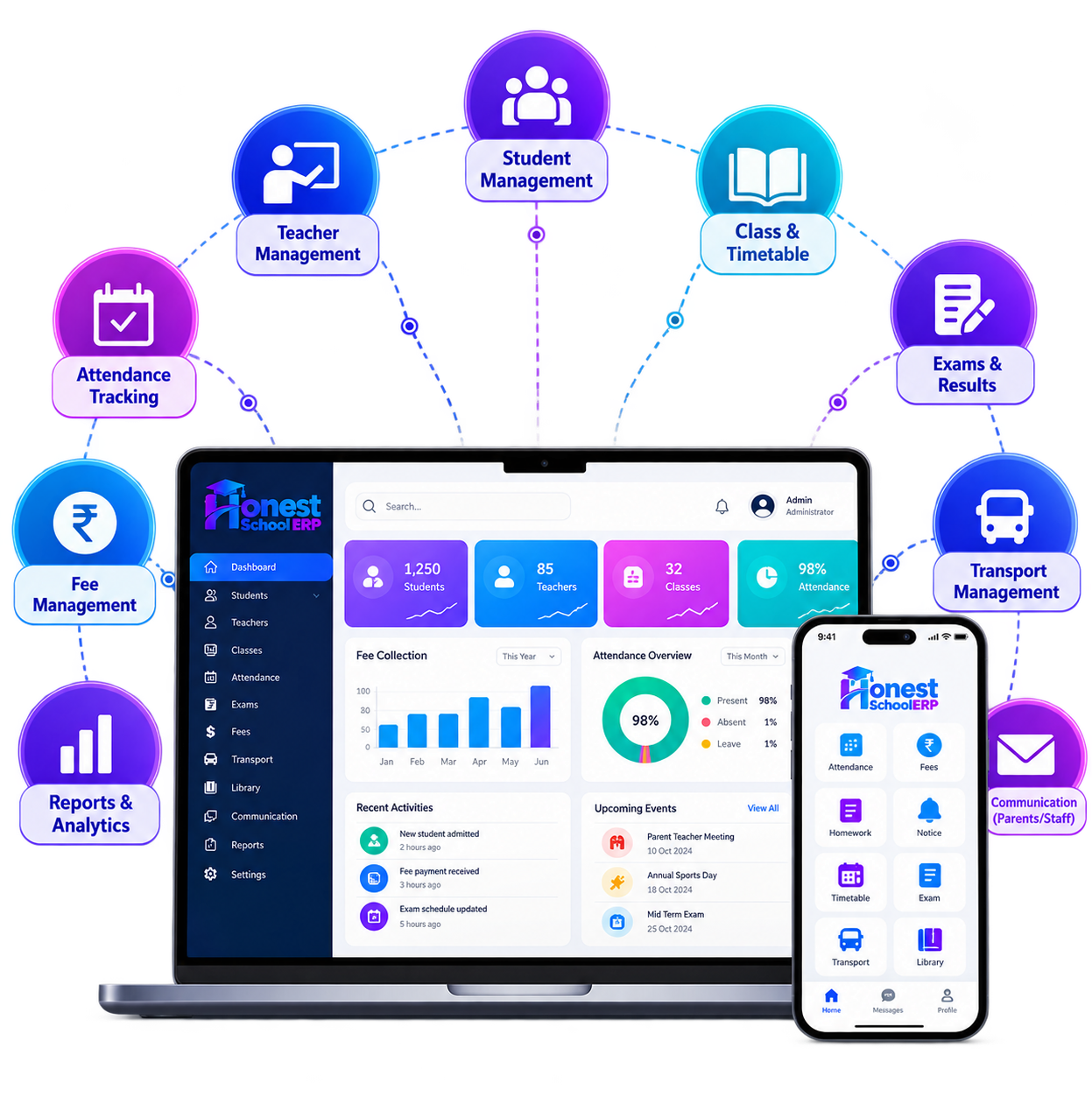
The same campus platform that already holds attendance, assignments, and results can carry the STEM class, so the practical work is not recorded in a separate tool.
Lessons are built around projects and hands-on work so a concept is something the student does.
Teachers get a structure for the session, the activity, and a way to record how the class went.
Dashboards show individual and class progress so the programme is not judged only by a year-end display.
The same approach can run in a small school or a large one, beside the systems the campus already uses.
Sessions are meant for the computers and tablets a modern classroom uses, not a separate lab network.
Proven at scale
25+
Years Legacy
2,000+
Satisfied Clients
96%
Client Retention
40+
Modules
25,000+
Professionals Trained
15,00,000+
Students Managed
Why schools choose it
Students spend more of the STEM class on a task than on a lecture.
Teachers can see who is keeping up while the unit is still running.
Collaboration and problem-solving have a place in the lesson plan.
Management can follow outcomes without collecting paper from every lab.
The school can show families a practical programme, not only a timetable label.
The emphasis is on activities and projects, with a record of progress, rather than a chapter to read on screen.
Hands-on work, group projects, and interactive lessons give the class something to do with the idea.
They follow a lesson structure, track performance, and use the digital tools in the session instead of a separate register.
Yes. It is meant to scale and to sit beside the school systems already in use.
Clearer outcomes, students who are active in the class, and a programme that prepares learners for technical work later.
Project templates, digital tools, and activity resources give the class a way to learn by doing.
Dashboards and reports cover a student and a class, which is what a review meeting needs.
Current classroom devices, and a connection to the school systems you already run.
Students practise STEM skills, collaboration, and applied thinking, which is the preparation technical work actually asks for.